
 Free SEO Audit
  Popular
 SEO
SEO
 Google Ads Management
 Ecommerce SEO
 Web Design Service
 White Label SEO

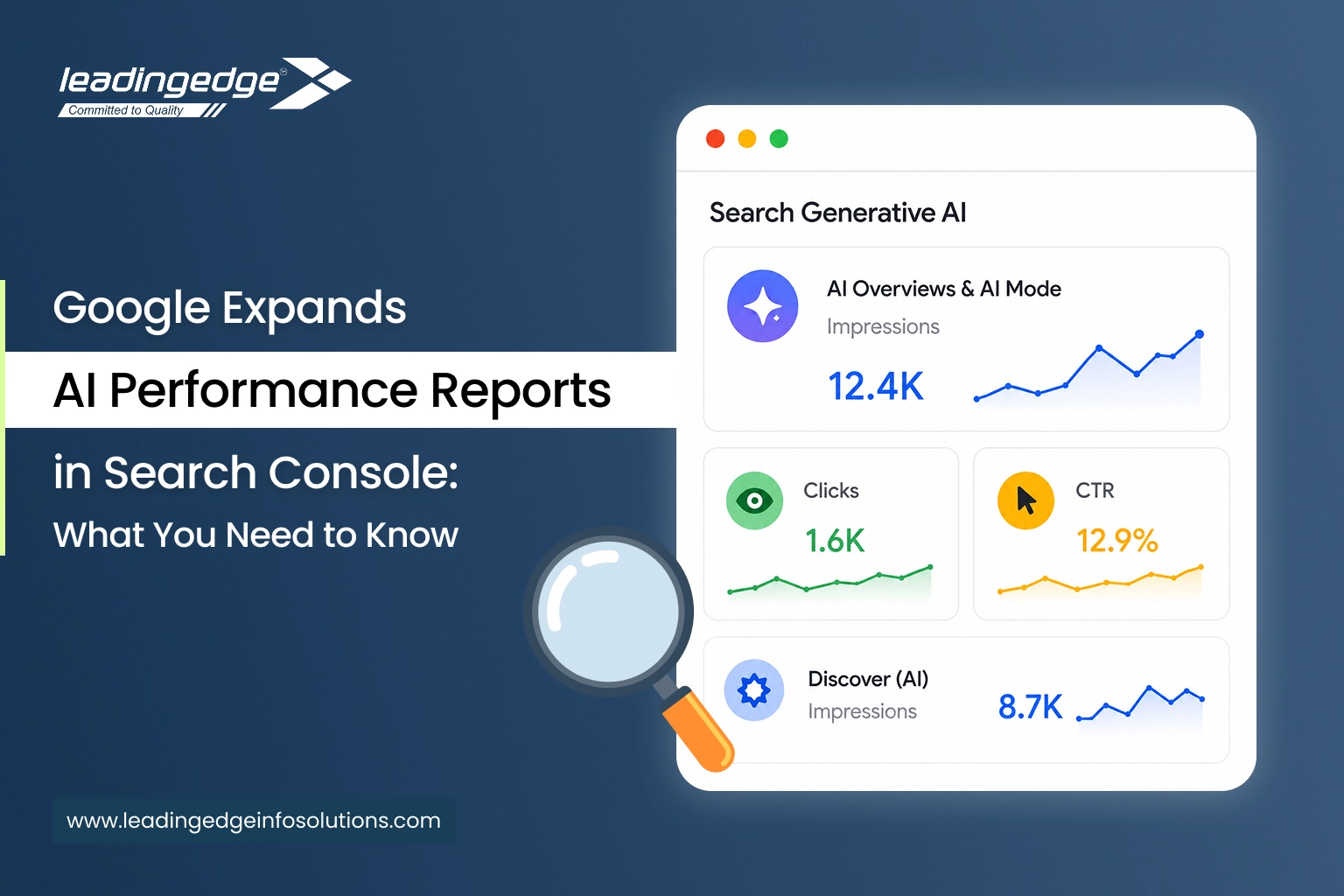
For nearly two years, SEOs and website owners have faced the same blind spot: you could tell that AI Overviews and AI Mode were reshaping search results, but you had no direct way to see whether your own pages were showing up inside them. Overall impression numbers in Search Console told you something was happening; they just didn’t tell you what.
On June 3, 2026, Google closed that gap. The company launched dedicated Search Generative AI performance reports inside Search Console, giving site owners their first purpose-built view into how content performs across AI-powered search experiences. If you run a website, manage SEO for clients, or work with a digital marketing company in India to handle your search visibility, this update directly changes how you should be measuring performance going forward.
What Google Exactly Launched
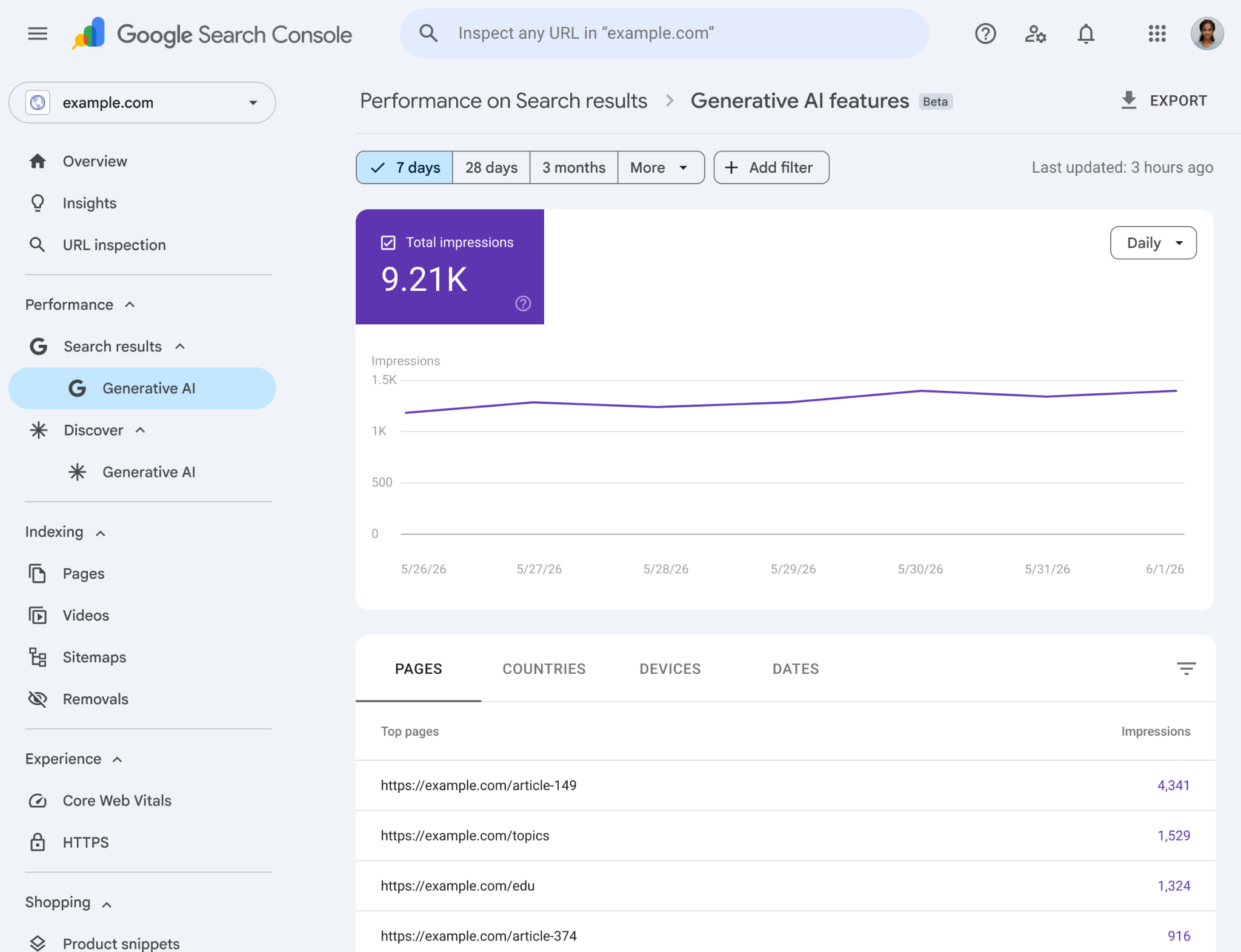
Google introduced a standalone reporting section, separate from the existing Performance report, dedicated specifically to generative AI features. It covers two distinct surfaces:
- Generative AI features in Search – including AI Overviews and AI Mode
- Generative AI features in Discover
It’s worth being precise about what this is and isn’t. This isn’t new data appearing out of nowhere. Impressions from AI features were already being counted inside your overall Search Console performance totals. What’s changed is visibility. Google has now broken that data out into its own dedicated view, so you no longer have to guess how much of your traditional performance report was influenced by AI placements versus standard blue-link results.
The 5 Data Points Now Available in the New Report
The new reports are built around five data dimensions:
- Impressions: how often URLs from your site appeared inside AI Overviews, AI Mode, or Discover’s generative features
- Pages: which specific URLs are being surfaced within AI-generated results
- Countries: a geographic breakdown of your AI visibility
- Devices: desktop versus mobile appearances (available for Search results only, not Discover)
- Dates: performance trends at hourly, daily, weekly, and monthly granularity
For any SEO company working across multiple client accounts, this is genuinely useful. You can now check whether a particular content type – for instance, comparison pages or how-to guides – is consistently picked up by AI features, or whether visibility is concentrated in a handful of markets that deserve more localized content investment.
Before vs. After: What Actually Changes in Your Search Console?
To help you visualize how this Google Search Console update impacts your day-to-day data tracking, here is a quick breakdown of what things looked like before this rollout versus what you can see now.
| Feature / Metric | Before This Update | After This Update |
| Data Separation | AI-driven traffic was completely bundled with standard organic clicks and impressions. There was no way to isolate AI results. | You get a separate, dedicated “Generative AI” view under the Performance section for isolated tracking. |
| AI Overviews Visibility | Webmasters had to rely on third-party scraping tools to guess if their site was appearing in AI answers. | Direct data source: Google displays exact impression metrics whenever your URLs are used to ground an AI response. |
| Tracking Across Ecosystems | Visibility metrics were heavily limited to standard web results, images, and video tabs. | You can now track performance specifically across AI Overviews, AI Mode (Chat), and Discover AI Features. |
| Granular Dimensions | Only standard daily or aggregated timeline filters were available for basic performance types. | Deep, time-sensitive tracking available by Pages, Countries, Devices, and Dates (down to the hourly level). |
| Publisher Control | Site owners had to use broad robots.txt directives (like Google-Extended), which risked blocking AI crawlers entirely from site access. | A dedicated administrative toggle allows you to opt out of live search AI grounding without hurting traditional organic rankings. |
The Big Gap – Click Data is Still Missing
While this data is incredibly valuable for a modern seo company, Google’s rollout features a major limitation that digital marketers must navigate carefully. The new reports show impressions only. There is no click data, no CTR, no average position, and no query-level breakdown included in this release.
That means you can see that your content is appearing inside AI-generated answers, but you can’t yet tell whether that visibility is translating into actual visits. Google has said it plans to add more metrics over time based on feedback, but no timeline has been confirmed. Until click data arrives, impression trends should be treated as a visibility signal, not a traffic or revenue signal.
The New Opt-Out Toggle: Should You Use It?
Google also introduced a control that lets site owners decide whether their content is used within AI Overviews, AI Mode, and generative Discover features at all. Enabling the opt-out removes your content from these AI surfaces without affecting your rankings in standard organic search results.
This isn’t a default recommendation for most businesses. Opting out means giving up impressions and any downstream traffic AI features might send your way, at a point when AI search is becoming a meaningful discovery channel.
It’s a more relevant option for publishers whose business model depends heavily on click-through traffic, or for brands with specific concerns about how their content is represented in AI-generated summaries. For most companies offering digital marketing services, staying visible and monitoring data are the more practical approaches right now.
Who Can Access the Reports Right Now (Rollout Status)
The rollout is phased. Google is making the reports available to a subset of websites first, gathering feedback before expanding access more broadly. If you don’t see the new section in Search Console yet, your site likely isn’t in the initial cohort. Check back under the Performance section periodically, as availability is expected to widen over time.
Dominate Google AI Overviews: Moving from SEO to GEO
To make your website show up inside these brand-new AI reports, traditional keyword stuffing will not cut it. You need to align your content with how machine-learning models process human language.
- Optimize for Information Density: Google’s AI prioritizes content that provides concise, direct, and fact-checked answers to complex questions.
- Double Down on E-E-A-T: Experience, Expertise, Authoritativeness, and Trustworthiness are the fundamental pillars AI engines use to select trustworthy sources.
- Leverage Mixed Search Strategies: Relying solely on organic avenues during major algorithm shifts can expose your pipeline to unnecessary risk. Balancing your visibility with highly targeted PPC services in India helps keep lead generation consistent while your long-term organic footprint adapts to GEO.
Whether you manage an in-house brand or run an agency utilizing a white label seo agency to deliver top-tier results, adapting to this interface shift is non-negotiable.
At Leading Edge Info Solutions, we’re already tracking this rollout closely for our clients so their content strategy keeps pace with how Google surfaces results, not how it used to. If you want a clear read on where your site currently stands, get in touch with the expert team at our digital marketing company in India for a visibility audit.