 Free SEO Audit
  Popular
 SEO
SEO
 Google Ads Management
 Ecommerce SEO
 Web Design Service
 White Label SEO


The average cost per click on Google Ads hit $5.26 in 2025. That’s up 87% across industries compared to just a few years ago.
For a dental practice, a roofing company, or an e-commerce store running on a fixed monthly budget – that kind of CPC inflation quietly kills ROI without anyone noticing until the leads dry up.
Here’s the thing most businesses don’t hear: a lower CPC doesn’t always mean better results. Cheap clicks from the wrong audience are worse than expensive clicks from buyers ready to act. The real goal is reducing wasted cost per click while keeping the traffic that actually converts.
This guide covers seven practical ways to do exactly that whether you’re managing campaigns yourself or evaluating what a Google Ads agency can do differently for your budget.
1. Raise Your Quality Score – It’s the Biggest Lever You Have
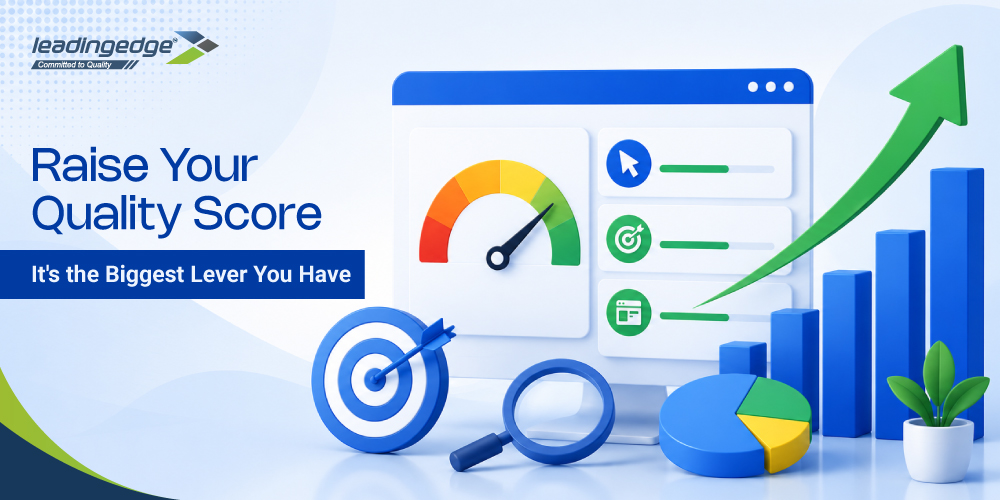
Google doesn’t just give the top ad spot to whoever bids the most. It combines your bid with your Quality Score to determine Ad Rank. A high Quality Score means you can outrank competitors and pay less per click than they do for the same position.
Quality Score is rated 1 to 10. Every point increase typically reduces CPC by around 10%. Hit a score of 8-10 and you could pay up to 50% less per click compared to a competitor with a score of 5.
Three factors make up your Quality Score:
- Expected Click-Through Rate (CTR): how likely your ad is to get clicked compared to others targeting the same keyword.
- Ad Relevance: how closely your ad copy matches what the searcher typed.
- Landing Page Experience: whether the page a user lands on actually delivers what the ad promised.
All three need to work together. A great ad pointing to a weak landing page still pulls your score down. A relevant landing page paired with vague ad copy does the same.
Quality Score vs. CPC Impact: Quick Reference
| Quality Score | CPC Impact |
| 10 | Up to 50% below average CPC |
| 8–9 | 20–30% below average CPC |
| 6–7 | Near average CPC |
| 4–5 | 20–30% above average CPC |
| 1–3 | 50%+ above average CPC |
Source: Google Ads benchmark data, Q1 2026
2. Fix Your Keyword Strategy – Most Accounts Target Too Broadly
Broad keywords have high competition. High competition means high CPC. That part is obvious.
What’s less obvious: broad match keywords in 2026 trigger far more search variations than they used to. Google’s AI-driven matching has expanded what “broad” actually means. You end up paying for clicks from people who weren’t really looking for what you offer.
Long-tail keywords – phrases with four or more words – fix this. “Emergency roof repair Dallas after storm” costs significantly less per click than “roofing company.” The person searching the long-tail phrase is also further along in their decision. They’re not browsing. They need someone now.
The CPC is lower. The intent is higher. Both help.
Use Google’s Keyword Planner to find specific variations with lower competition. Look for what your top competitors are not bidding on — those gaps often have strong intent and relatively low cost.
Working with a skilled Google Ads agency helps here because this kind of keyword gap analysis takes time most business owners don’t have to spare.
3. Build a Negative Keyword List Before Anything Else
If you’re running Google Ads without a thorough negative keyword list, you’re almost certainly paying for clicks you’d never want.
A locksmith bidding on “locksmith services” without excluding “car locksmith training,” “locksmith tools for sale,” or “locksmith salary” will burn through the budget fast. None of those clicks convert into booked jobs.
Adding negative keywords tells Google explicitly which searches should not trigger your ad. It’s one of the fastest ways to cut wasted spend and it directly reduces average CPC because irrelevant, low-converting searches drag your Quality Score down.
Where to start: pull your Search Terms Report weekly. It shows exactly what people typed before clicking your ad. Flag anything that doesn’t match buyer intent. Add it to your negatives.
Terms like “free,” “DIY,” “how to,” “training,” “cheap,” and competitor names are common culprits across almost every industry.
4. Match Your Ad Copy to What People Are Actually Searching
One of the most common CPC problems isn’t the bid – it’s the mismatch between what someone searches and what the ad says.
A roofing company running one generic ad for all keywords – “Trusted Roofing Services in Dallas” – for searches ranging from “hail damage roof repair” to “flat roof installation” is leaving relevance on the table. Google sees the low relevance. Ad Rank drops. CPC goes up.
The fix: tighter ad groups. Each ad group should contain keywords with the same intent, and the ad copy should speak directly to that intent. Someone searching “emergency roof leak repair” should see an ad that mentions emergency repairs – not a generic brand tagline.
This is exactly where working with a reliable Google Ads company pays for itself. Proper account structure takes hours to set up correctly. Done right, it pushes up Quality Score, improves CTR, and brings CPC down consistently.
Use all available ad assets – sitelinks, callouts, structured snippets, call extensions. They increase click-through rate without increasing your bid, which signals strong ad quality to Google.
5. Stop Paying for Clicks at the Wrong Time and Place
Not all hours are equal. Not all locations perform the same. Not all devices convert at the same rate.
An e-commerce store might see 60% of its conversions happen between 7pm and 10pm. Paying full bid rates at 2am for an audience that never buys wastes budget and raises average CPC for no gain.
A legal firm in Texas doesn’t need equal bids in every state. If clients in Austin and Houston convert and clients from other states rarely do – bid up in those cities and reduce bids elsewhere.
Check your data for:
- Day of week: which days produce the most conversions
- Time of day: when buyers are actually active
- Device: mobile vs. desktop conversion rates vary significantly by industry
- Location: which areas produce the highest quality traffic
Applying negative bid adjustments where data shows poor performance cuts wasted clicks and lowers your average CPC without giving up the traffic that actually converts.
If you’re working with the best PPC marketing agency for your industry, this kind of bid sculpting is reviewed regularly – not set once and forgotten.
6. Use RLSA to Pay Less for Warmer Audiences
RLSA stands for Remarketing Lists for Search Ads. Most small and mid-size businesses haven’t touched it. That’s a missed opportunity.
Here’s what it does: it lets you adjust bids specifically for users who’ve already visited your website when they go back to search on Google. These users already know you. They’re more likely to click and more likely to convert – so even if you bid slightly more for them, your cost per conversion drops.
Flip this around for cold audiences: you can apply negative bid adjustments on broad keywords for users who’ve never been to your site, reducing wasted spend on lookers who haven’t shown intent.
For a PPC company in India or any agency managing campaigns with limited budgets, RLSA is one of the most underused efficiency tools available – especially useful for roofing, dental, real estate, and legal campaigns where the buying cycle involves multiple searches before a decision.
7. Improve Landing Page Experience – Google Is Watching
Your landing page isn’t just a conversion tool. It’s a Quality Score input.
Google sends bots to evaluate whether your landing page is relevant, fast, and useful. Slow pages, poor mobile experience, or content that doesn’t match the ad copy all lower your landing page score – which drops your overall Quality Score – which raises your CPC.
Key things to check:
- Page loads in under 2.5 seconds on mobile (use Google PageSpeed Insights)
- The headline on the page matches the promise in the ad
- There’s a clear, single call to action – not a cluttered page with five different goals
- The page answers the question the searcher came with
A landing page improvement that bumps Quality Score from 5 to 7 can cut CPC by 20% – with no change to your bids at all.
For a best digital marketing agency in Mohali perspective, page experience optimisation is often the fastest win available to businesses that have never properly connected their ad copy to landing page content.
Our Google Ads Management Services include full landing page audits as part of campaign setup because sending paid traffic to a weak page is one of the most common budget leaks we fix.
Putting It Together
Lower CPC isn’t just about cutting bids. It’s about building campaigns that Google rewards with cheaper clicks because they’re genuinely relevant, properly structured, and pointing to pages that deliver what the searcher wants.
The businesses paying the most per click in any industry are usually those with poor Quality Scores, broad targeting, and no negative keyword strategy. Those three things alone can double your CPC compared to a well-managed account running the same budget.
Our PPC Services are built around exactly this — systematic CPC reduction without sacrificing lead quality. We’ve managed paid campaigns across dental, legal, roofing, real estate, and e-commerce businesses across the US and India.
For more on how paid media is evolving in 2026, read our guide: Top 5 Paid Media Trends You Can’t Ignore in 2026.
If your Google Ads CPC is climbing and results are flat – talk to Leading Edge Info Solutions, a trusted Google Ads agency with 12+ years of experience. We’ll audit your account and show you exactly where the budget is going.