 Free SEO Audit
  Popular
 SEO
SEO
 Google Ads Management
 Ecommerce SEO
 Web Design Service
 White Label SEO


For twenty years, “ranking #1” was the goal of SEO. In 2026, that goal is only half the picture. Google’s AI Overviews now answer a large share of queries directly above the traditional results, often before a user ever scrolls down to click a link. At the same time, hundreds of millions of people are asking ChatGPT, Perplexity, Claude, and Gemini questions directly in conversation, and those tools either cite a source or they don’t.
That’s a simple either/or: you get cited, or you’re invisible. And it’s already changing how people find information online. Industry estimates suggest AI tools now handle somewhere around 12–18% of English-language informational searches, up from almost nothing a year earlier.
Getting on the right side of that either/or takes a specific skill set: AI Search Optimization. Here, we cover the two main elements, commonly called Answer Engine Optimization (AEO) or Generative Engine Optimization (GEO), depending on who you ask. The names differ; the underlying skill doesn’t: structuring, writing, and technically preparing your content so AI systems can confidently extract it, trust it, and quote it.
What is AEO/GEO, and How is it Different from SEO?
GEO (Generative Engine Optimization) and AEO (Answer Engine Optimization) are part of an umbrella strategy called AI Search Optimization. This is the practice of structuring content so AI systems can confidently extract, summarize, and cite it, as opposed to traditional SEO, which optimizes for ranking position and click-through in a list of links.
To build a winning search strategy, you must understand how these three disciplines intersect:
| Optimization Strategy | Core Objective | Primary Target Engines | Key Metric of Success |
| Traditional SEO | Rank web pages near the top of search result lists. | Google Search, Bing, Yahoo | SERP Rank, Organic Impressions & Clicks |
| AEO (Answer Engine Optimization) | Provide instant, direct answers that algorithms can easily extract. | Google Featured Snippets, Siri, Voice Search | Position Zero Inclusion & Direct Answer Wins |
| GEO (Generative Engine Optimization) | Influence what AI models think, synthesize, and cite in multi-step answers. | ChatGPT, Google AI Overviews, Perplexity, Claude | Share of Model (SoM) & Citation Rate |
You’ll also see the terms AIO (AI Optimization), LLMO (LLM Optimization), GSO (Generative Search Optimization), and simply ChatGPT SEO used almost interchangeably in the industry. They describe the same underlying goal from slightly different angles — AEO leans toward direct-answer formats, LLMO toward the model layer itself, and “ChatGPT SEO” is usually just shorthand people use when they mean AEO/GEO specifically for ChatGPT’s answers. For practical purposes, GEO and AEO are the two terms that have stuck, and we’ll use them as the umbrella terms throughout this guide.
How AI Search Engines Choose Which Content to Cite
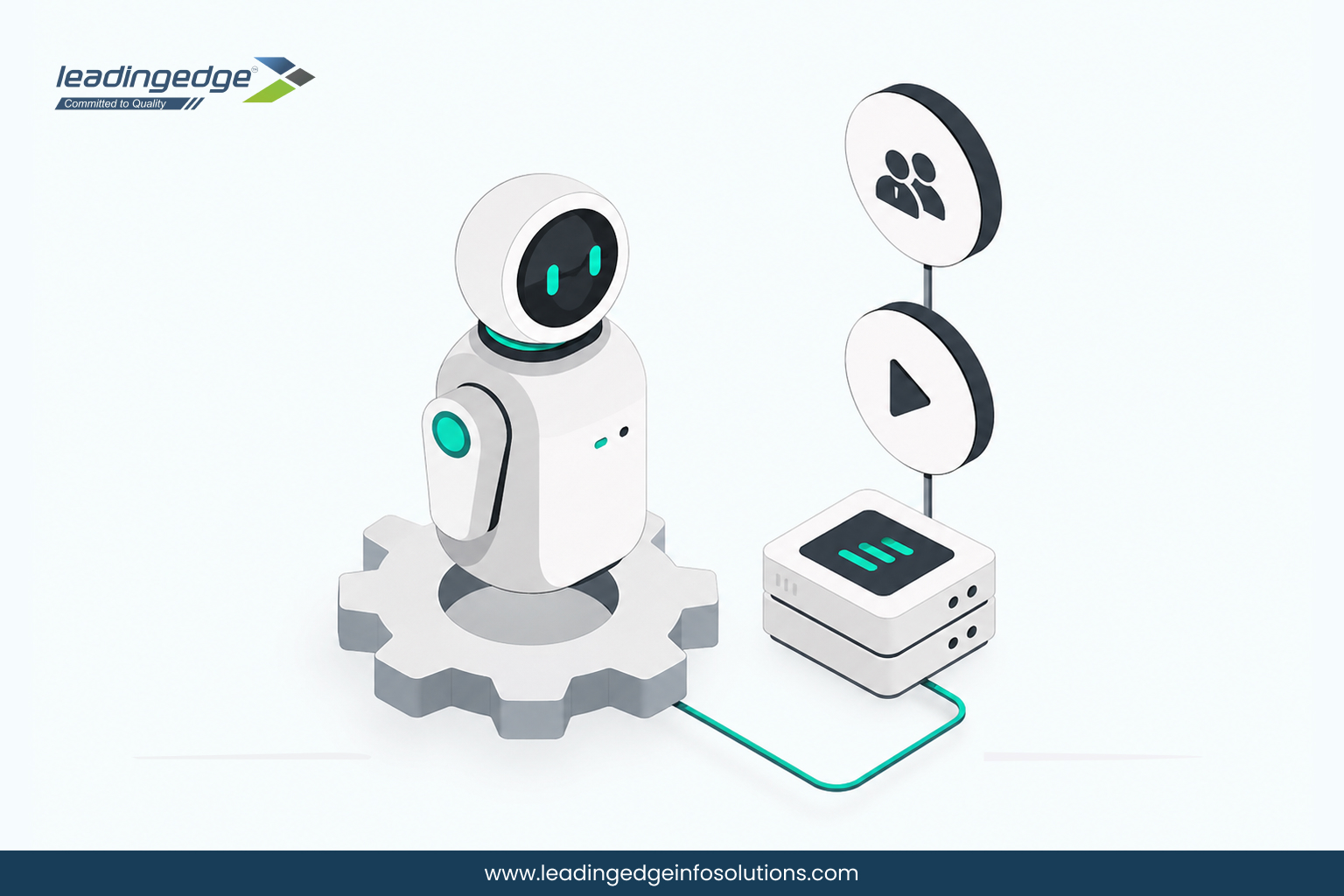
Traditional search is a retrieval problem: match a query against an indexed set of pages, rank by relevance and authority. Generative engines add a second layer on top of retrieval: synthesis. The system pulls a set of candidate sources, then decides which ones to quote, paraphrase, or leave out entirely while writing the answer.
That second step is where AI Search Optimization does its work. Ranking well gets you into the candidate pool. Being extractable, unambiguous, well-structured, and fact-dense is what gets you pulled out of that pool and into the actual answer.
This isn’t a guess. The paper that coined the term “Generative Engine Optimization,” published by researchers from Princeton, Georgia Tech, the Allen Institute for AI, and IIT Delhi at KDD 2024, tested nine content strategies against a benchmark of 10,000 real queries.
Their finding: classic SEO tactics like keyword stuffing performed worse than doing nothing. What worked was adding cited statistics, direct quotations, and technical terminology — strategies that improved a page’s visibility inside generated answers by roughly 30–40% on the paper’s core visibility metrics, even for pages that weren’t top-ranked in traditional search.
That’s the single most evidence-backed finding in this field, so it anchors everything below.
How to Structure Content for AI Citations
Answer the Question First
AI systems tend to extract from the first few lines of a section, not the narrative buildup. Compare:
Before: “Businesses today are increasingly realizing that as AI systems become more prevalent, it’s becoming important to think about how content gets discovered and used by these new technologies, which is where the concept of GEO comes in.”
After: “What is GEO? GEO is the practice of structuring content so AI assistants can confidently cite it in generated answers.”
The second version is one sentence, answers the implied question directly, and is trivially easy for a model to lift and quote. Every page, ideally every H2, should follow this pattern: state the answer first, then elaborate.
While the same principles improve visibility across multiple AI platforms, they’re especially important if you’re trying to optimize for Google AI Overviews. Google’s AI-generated summaries tend to favor pages that provide concise answers, clear structure, credible sources, and well-organized content that can be confidently extracted into an overview.
Write Content AI Can Easily Extract
- TL;DR summaries at the top of long pages
- Question-and-answer sections phrased the way people actually type prompts (“How do I rank in ChatGPT?” rather than a generic header like “Getting Started”)
- Numbered lists and comparison tables for steps, options, or data
- One clear claim per sentence — long, qualifier-heavy sentences are harder to extract cleanly than short, declarative ones
Support Your Content with Facts and Sources
Concrete numbers, dated statistics, and named sources consistently outperform generic claims. Where possible, cite where a number came from. The source of a stat is itself part of what builds AI trust in your content, not just human trust.
Show Expertise and Keep Content Updated
Visible bylines, author credentials, and clear “published” and “last updated” dates are trust signals both for Google’s E-E-A-T (Experience, Expertise, Authoritativeness, Trustworthiness) evaluation and for the source-ranking layer inside generative engines.
Technical SEO for AI Search Visibility
Content strategy is wasted if the crawlers can’t get to the page in the first place. While auditing client websites, we’ve repeatedly found sites that had strong content but were unintentionally invisible to AI systems — usually because of a robots.txt file inherited from an old template, or a security plugin blocking bots by default.
Know Which AI Crawlers Can Access Your Site
This is the detail most robots.txt guides get wrong. OpenAI, for example, documents three distinct user agents, each with a different job:
- GPTBot — crawls content for AI model training. Blocking it opts you out of training data collection only.
- OAI-SearchBot — indexes pages specifically for ChatGPT’s search feature. OpenAI’s own documentation states that sites opted out of OAI-SearchBot will not appear in ChatGPT search answers — so blocking this one, specifically, is what removes you from citations.
- ChatGPT-User — fetches a page live when a user asks ChatGPT to read a specific URL during a session.
Anthropic (Claude) and other providers follow a similar training-vs-search split with their own named crawlers. Blocking “the AI bot” as one blanket rule almost always produces the wrong outcome. You either train models on your content unintentionally, or you block search visibility while thinking you only opted out of training.
A minimal robots.txt pattern to allow ChatGPT search citations while opting out of training might look like:
User-agent: GPTBot
Disallow: /
User-agent: OAI-SearchBot
Allow: /
User-agent: ChatGPT-User
Allow: /
Repeat the equivalent block for each AI provider’s crawlers, and confirm the rule using each provider’s published documentation; don’t guess.
Add Structured Data (Schema Markup)
Schema doesn’t guarantee a citation, but it removes ambiguity for both search engines and AI systems. At minimum, prioritize:
- Article schema — author, publish date, headline
- FAQPage schema — for genuine Q&A sections
- Organization schema — entity clarity for your brand
- HowTo schema — for step-based processes
FAQPage and Article schema in particular give AI crawlers a machine-readable confirmation of what your page is claiming and who’s making the claim — reducing the chance a model misreads or simply skips the page.
If your goal is to optimize for Google AI Overviews, combine strong technical SEO with structured content, schema markup, and regularly updated information. These signals make it easier for Google’s AI systems to understand and surface your content.
Should You Use llms.txt?
llms.txt is a plain-text file at your site root that gives AI systems a curated list of your priority pages. It’s inexpensive to add and increasingly common, but large-scale analyses across hundreds of thousands of domains have found no measurable citation lift from the file by itself. Treat it the way you’d treat a clean sitemap: good practice, not a strategy.
Prioritize by actual impact
Based on the evidence available, roughly in order of leverage: domain authority and trust signals first, then GEO-ready content structure, then schema markup, then crawler-access hygiene (robots.txt, llms.txt). Don’t let a checklist item like llms.txt distract from the content and authority work that has a proven effect.
Earn Genuine Third-Party Mentions
A meaningful share of what AI systems cite for brand-related queries comes from sources the brand doesn’t control directly, such as press coverage, review sites, forums, and independent publishers mentioning the brand on their own. This is digital PR and organic authority-building, not a shortcut you can automate.
In one recent audit, we found a client ranking on page one of Google for their target terms but receiving zero AI citations — while a smaller competitor with weaker rankings was being cited consistently in ChatGPT answers for the same queries. The difference wasn’t technical. It was that the competitor had a handful of genuine mentions on industry publications with clear author bylines and specific data points, while our client’s content, though well-ranked, was generic and unattributed. Traditional rankings and AI citations are correlated, but they aren’t the same competition.
A note on integrity here: manufacturing mentions like mass-produced guest posts, planted citations, fabricated “expert” bylines risks running into search engines’ scaled-content-abuse policies and creates real reputational and legal exposure. Earn the mentions; don’t fabricate them.
How to Measure Your AI Search Ranking Over Time
- Build a baseline. Pick 20–30 real queries your customers would plausibly type into ChatGPT, Perplexity, Gemini, or Google. Record whether you’re cited, in what position, and who’s beating you.
- Track AI referral traffic. Most modern analytics platforms can now segment traffic where the referrer is an AI assistant. It’s typically a smaller volume than organic search, but often higher intent.
- Re-run the baseline on a fixed cadence. Monthly or quarterly, repeat the same query set and track what changed — citations gained, citations lost, and which competitors moved.
Common AI Search Optimization Mistakes
- Treating GEO as a replacement for SEO. Most of your traffic still comes through traditional search today. AI Search Optimization is additive.
- Keyword stuffing for AI, the same way brands over-optimized for Google in 2010. The KDD 2024 research is explicit that this underperforms compared to doing nothing.
- Fabricating authority signals. Fake reviews or planted citations create policy and reputational risk.
- Blocking the wrong crawler by accident. Understand the difference between training crawlers and search/citation crawlers before you touch robots.txt.
- Chasing every new acronym. AEO, GEO, AIO, LLMO, and GSO are largely the same underlying discipline. Focus on extractability, authority, and crawler access rather than terminology.
Your AI Search Optimization Checklist
If you’re building this out for the first time, the highest-leverage sequence is usually:
- Audit robots.txt and crawler access, crawler by crawler, across the major AI providers
- Restructure your highest-intent pages with TL; DRs, direct-answer openings, and genuine Q&A sections
- Add or clean up Article, FAQPage, and Organization schema on those same pages
- Build a baseline of your current AI citation performance across priority queries
- Layer in earned mentions and digital PR to strengthen the authority signals underneath all of the above
This work sits alongside the rest of your organic strategy. If you haven’t already, it’s worth reviewing your technical SEO foundation and content marketing plan, since both directly feed AI citation eligibility.
Improve Your AI Visibility with Leading Edge Info Solutions
At Leading Edge Info Solutions, our AI visibility audits look at:
- Whether ChatGPT, Perplexity, and Google AI Overviews can currently cite your content
- Crawler accessibility across every major AI provider, not just a blanket robots.txt check
- Schema implementation gaps on your priority pages
- Content extractability — how easily your pages can be quoted, not just read
- Where your competitors are being cited instead of you, and why
You’ll come out of it with a prioritized roadmap, not just a list of problems.
Ready to Find Out How Visible Your Website Is in AI Search?
Contact Leading Edge Info Solutions today to schedule your AI Search Visibility Audit and start building a strategy that’s designed for both traditional search engines and AI-powered search experiences.
Get Your Free AI Visibility Audit